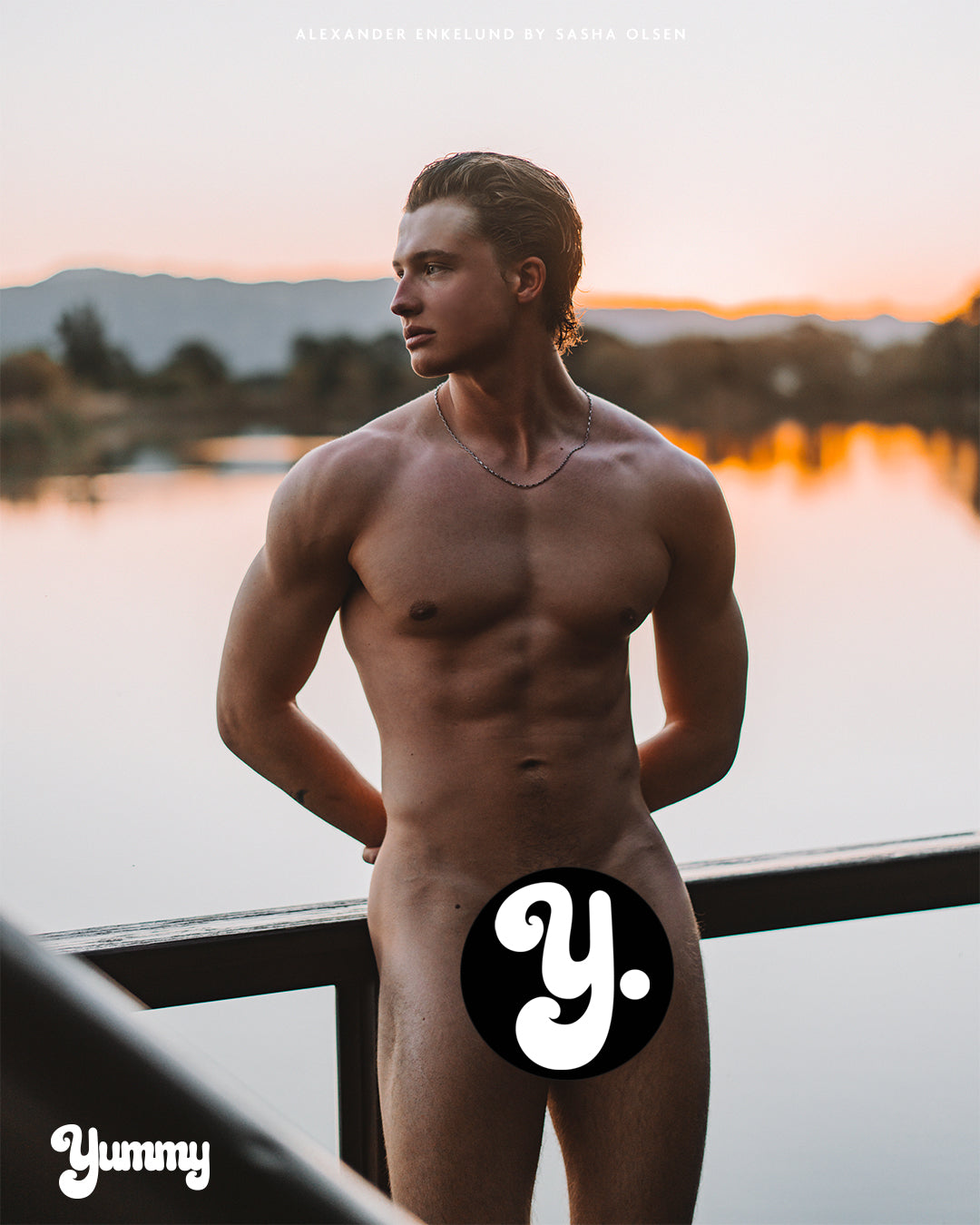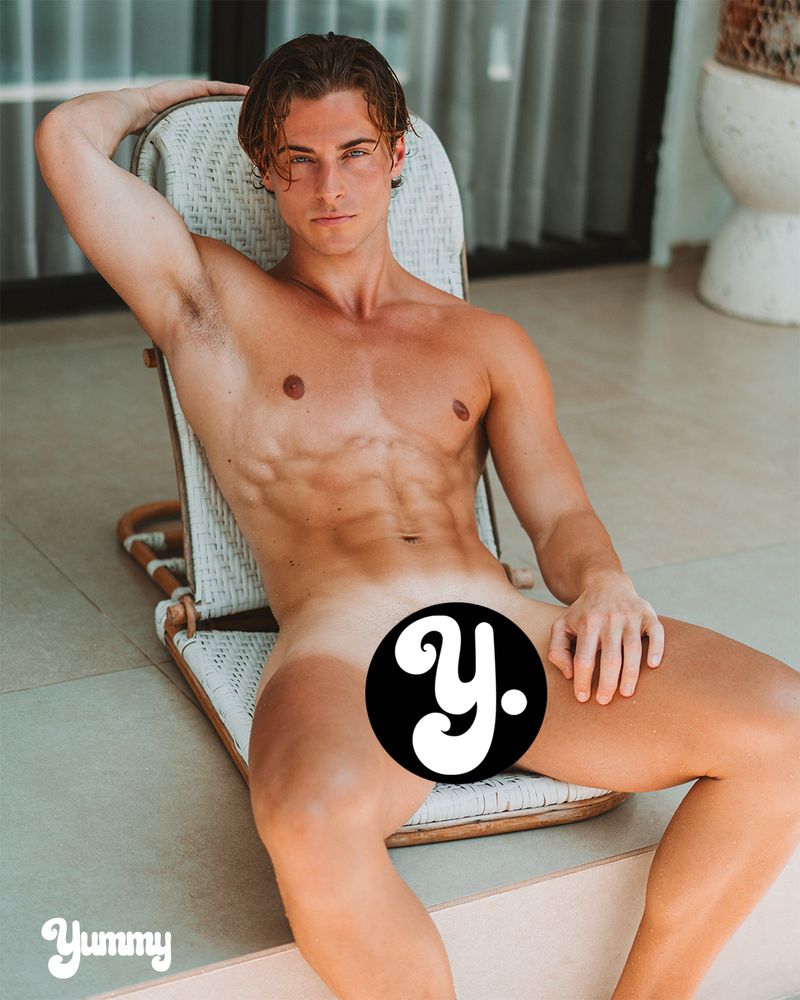



Photographs can tell us what someone looks like, but rarely who they are. Across the pages of Yummy Limited Issue Three, Gioele's body becomes part of sweeping coastlines, quiet interiors and intimate moments, yet behind every image is a young man whose story stretches far beyond the frame. At just twenty-three, the Italian model has already lived through professional sport, built a career in fitness and embraced modelling with the same discipline that once defined his life as a mountain biker. In this conversation, he reflects on vulnerability, trust, nature and what it means to be seen, not simply for the body that first catches the eye, but for the person beneath it.
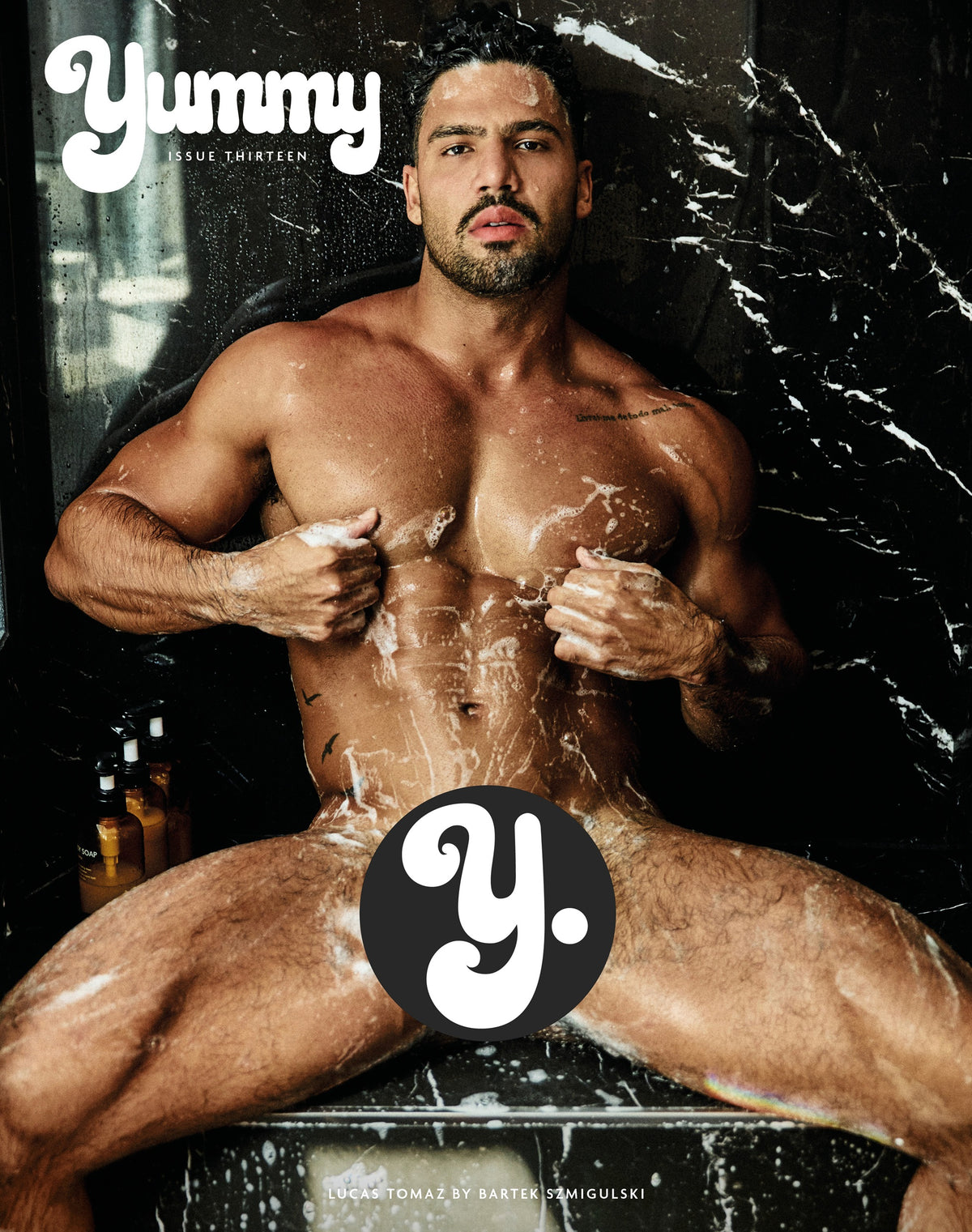
The images are cropped/made safe for online purposes, full images available inside Yummy Limited Issue Three
Photo story by sasha olsen, interview by Adrian Gomis Exposito
An Interview with Gioele Borghello
AGE. At just twenty-three, you've already lived several lives: athlete, model, coach and traveller. Do you think the boy who grew up in your parents' gyms would recognise the person you've become?
GB. I think he would be surprised, but also proud. I grew up in my parents' gyms, watching them work hard every day, and they taught me the value of commitment and humility. Even though my life has changed a lot, I still carry those lessons with me. Deep down, I don't think I've changed that much.
AGE. Whether outdoors or inside an apartment, these photographs strip everything back to just you. Did that simplicity make you feel more exposed, or more like yourself?
GB. At first, it definitely made me feel exposed, but not because of the nudity. It was the honesty of the moment. There was nothing to hide behind: just me and nature. After a while, that feeling became incredibly freeing, and I actually felt more like myself than I expected.
AGE. Strength has always been part of your world, but these photographs also reveal stillness and vulnerability. Did this project change the way you think about what strength really looks like?
GB. Yes, it did. Growing up, I thought strength was mostly physical, about pushing through difficult situations. This project reminded me that real strength is also about being comfortable with vulnerability. Standing in front of the camera with nothing to hide takes a different kind of confidence.
AGE. Looking through the book, it's easy to focus on what's visible. But what was happening behind the scenes, or inside yourself, that never made it into the photographs?
GB. There were a lot of emotions the camera couldn't capture: excitement, gratitude, a bit of nervousness before some shots, and moments when I stopped and realised how lucky I was to be there. Those are the memories I'll probably keep with me the longest.
"Real strength is also about being comfortable with vulnerability."
- Gioele Borghello
AGE. A project like this asks for more than showing your body; it asks for trust in the photographer, the place and yourself. What did you have to let go of to make these images possible?
GB. I had to let go of the fear of being judged. Once I trusted Sasha, the environment and the purpose of the project, everything became much more natural. It stopped being about how I looked and became about creating something honest and artistic.
AGE. Is there one image in the book that feels closest to who you are? What makes it stand out for you?
GB. There's one image where I'm simply standing still, looking out at the ocean. It's not the most dramatic photograph, but it feels the most genuine to me. It reflects a quieter side of my personality that people don't always get to see.
AGE. Twenty years from now, this book will still show the twenty-three-year-old Gioele standing on these beaches. What do you hope your future self sees when he opens these pages again?
GB. I hope he sees someone who wasn't afraid to say yes to new experiences. At twenty-three, I wanted to live fully, step outside my comfort zone and create memories that would stay with me forever. I hope he looks back with gratitude rather than nostalgia.
AGE. Every reader will bring something different to these photographs: beauty, desire, freedom or something else entirely. When they close the book, what feeling do you hope stays with them?
GB. I hope people close the book with a sense of freedom. Of course, they'll see the human body, but I hope they also see confidence, respect for nature and authenticity. If these photographs encourage someone to feel a little more comfortable in their own skin, then I think we've achieved something meaningful.
"I had to let go of the fear of being judged."
- Gioele Borghello
"If these photographs encourage someone to feel a little more comfortable in their own skin, then I think we've achieved something meaningful."
- Gioele Borghello